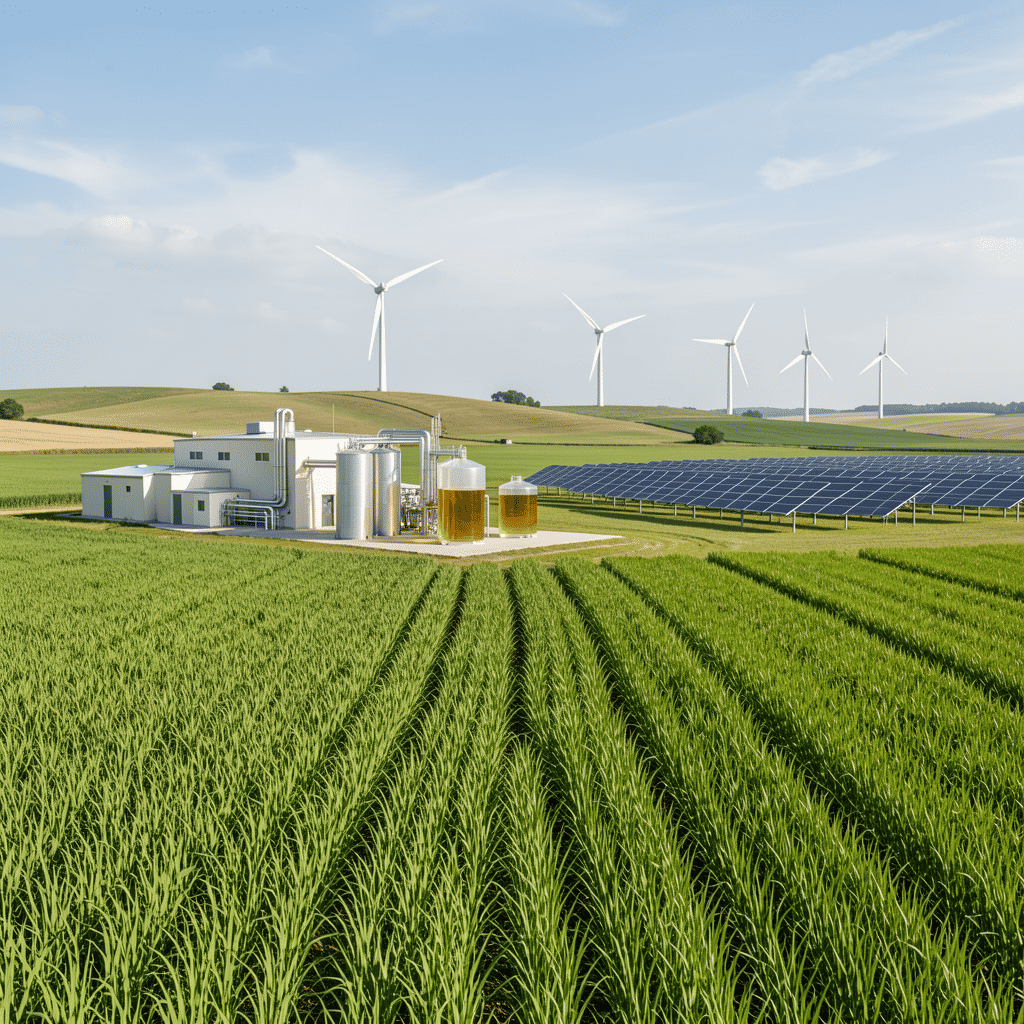
As the world grapples with the dual challenges of climate change and dwindling fossil fuel reserves, sustainable biofuels present a promising pathway towards a cleaner and more sustainable future. These renewable energy sources, derived from organic materials, have the potential to significantly reduce carbon emissions while providing a sustainable alternative to traditional fossil fuels.
The process of converting organic materials into biofuels involves harnessing the energy stored in plants, algae, and waste products, transforming them into usable fuels such as ethanol, biodiesel, and biogas. This not only helps in reducing dependence on non-renewable energy sources but also supports agricultural stability by utilizing crops like corn, soybeans, and sugarcane for fuel production. Moreover, advancements in technology are enabling the use of non-food biomass, such as agricultural residues and municipal solid waste, further alleviating food security concerns.
The environmental benefits of biofuels are substantial. Unlike fossil fuels, which release carbon that has been sequestered underground for millions of years, biofuels recycle atmospheric carbon dioxide. The plants used in biofuel production absorb CO2 during photosynthesis, creating a closed-loop system that can lead to a reduction in overall greenhouse gas emissions. This capacity to act as a carbon-neutral or, in some cases, carbon-negative energy source is crucial for meeting global emission targets and slowing the pace of climate change.
Economically, the biofuel sector envisions revitalization of rural areas and the creation of green jobs throughout the supply chain—from farming and collection of raw materials to processing and distribution. With the right policies and investments, this industry can contribute to energy security by reducing reliance on imported oil and stabilizing energy prices. Furthermore, biofuels can be integrated into existing fuel infrastructure with minimal modifications, making it easier for the industry to transition towards cleaner fuels.
Innovation is at the heart of transforming the biofuels sector. Researchers are exploring second and third-generation biofuels, which focus on using non-food biomass and even algae, known for their high yield and low environmental impact. Enzymatic and microbial technologies are being developed to efficiently break down lignocellulosic materials, leading to higher energy yields and further diminishing the carbon footprint of biofuel production.
However, the shift to sustainable biofuels is not without its challenges. Concerns over land use, water resources, and biodiversity must be addressed to ensure the biofuel industry does not inadvertently contribute to environmental degradation. Sustainable practices, such as precision agriculture and improved water management, will be crucial in overcoming these hurdles.
As we venture into an era of renewable energy, the emphasis on sustainable biofuels signifies a bold step forward in innovating for a greener future. By continuing to invest in research and development, while implementing sustainable practices, society can tap into a cleaner, more sustainable form of energy that benefits economies, ecosystems, and communities worldwide. Sustainable biofuels are more than just an alternative; they are a bridge to a future where energy demands and environmental stewardship coexist harmoniously.